
15 a 15 Jan. 2026 - 12:00
Brain evolution and the continuous extension of control
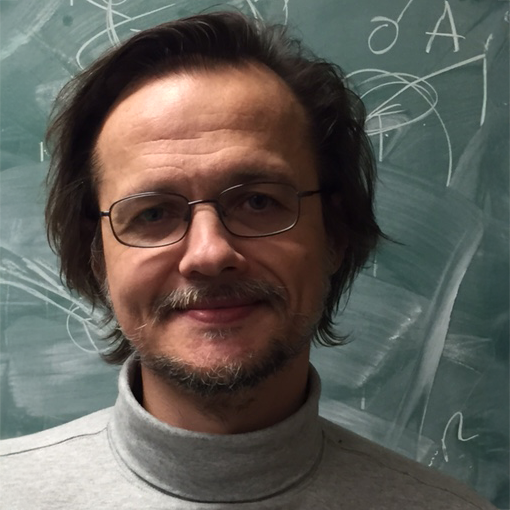
Paul Cisek, PhD, University of Montréal
15 a 15 Jan. 2026 - 12:00
Paul Cisek, PhD, University of Montréal
Carlos Ribeiro, PhD, Behavior and Metabolism
Seminar room
In theoretical neuroscience, the brain is usually described as an information processing system that encodes and manipulates representations of information about the world to build knowledge, make decisions and produce plans of action. This view leads to a subdivision of brain functions into putative processes such as object recognition, working memory, decision-making, action planning, etc., inspiring the search for their neural correlates. However, neurophysiological data do not support many of the predictions of these classic subdivisions. Instead, there is divergence and broad distribution of functions that should be unified, mixed representations combining functions that should be distinct and a general incompatibility with the conceptual subdivisions posited by theories of information processing.
In this talk, Paul will explore the possibility of resynthesizing a different set of functional subdivisions, guided by the growing body of data on the evolutionary process that produced the human brain. Paul will summarize, in chronological order, a proposed sequence of innovations that appeared in nervous systems along the lineage that leads from the earliest multicellular animals to humans. Along the way, functional subdivisions and elaborations will be introduced in parallel with the neural specializations that made them possible, gradually building up an alternative conceptual taxonomy of brain functions. These functions emphasize mechanisms for real-time interaction with the world, rather than for building explicit knowledge of the world, and the relevant representations emphasize pragmatic outcomes rather than decoding accuracy, mixing variables in the way seen in real neural data. Paul suggest that this alternative taxonomy may better delineate the functional pieces into which the brain is organized, and can offer a more natural mapping between behavior and neural mechanisms.
Paul Cisek is a full professor in the Department of Neuroscience at the University of Montréal. He has a background in computer science and artificial intelligence, doctoral training in computational neuroscience with Stephen Grossberg and Daniel Bullock and postdoctoral training in neurophysiological recording in non-human primates with Stephen Scott and John Kalaska. His work combines these techniques into an interdisciplinary approach to understanding how the brain controls our interactions with the world. In particular, his theoretical work suggests that the brain is organized as a system of parallel sensorimotor streams that have been differentiated and elaborated over millions of years of evolution, and his empirical work investigates the neural dynamics of how potential actions are specified and how they compete in the cortical and subcortical circuits of humans and other primates. He has published over 60 scientific articles in journals such as Nature, Neuron, Philosophical Transactions, Journal of Neuroscience, and Journal of Neurophysiology, with more than 14000 citations and an h-index of 49. His work is funded by CIHR, NSERC, CFI, FRQS, FRQNT and the EJLB Foundation.
Register here.
Champalimaud Research (CR) Colloquia Series is a seminar programme organised by the Champalimaud Centre for the Unknown to promote the discussion about the most interesting and significant questions in neuroscience and physiology & cancer with appointed speakers by the CR Community.

