
07 May. 2026 - 12:00
Biochemical Computation in Behavioral Regulation
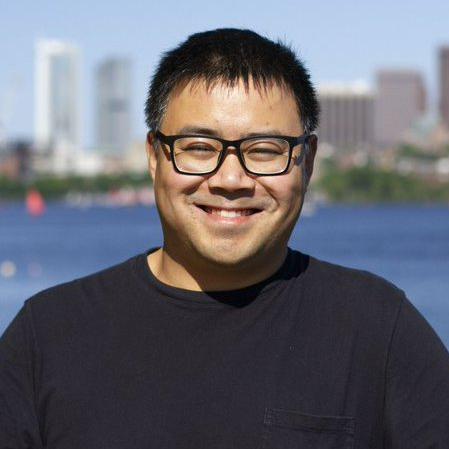
Stephen Zhang, Center for Neural Science, NYU – New York University
07 May. 2026 - 12:00
Stephen Zhang, Center for Neural Science, NYU – New York University
Il Memming Park, PhD, Neural Dynamics Lab
Seminar Room
Behavioral circuits operate over broad timescales ranging from milliseconds to days. While we have largely focused on fast neural computation using action potentials and synaptic transmission, much less is known about how behaviors are regulated over minutes, hours, and days. I argue that such slow-timescale computations can be carried out using molecular signals inside individual neurons, and will present evidence in three behavioral systems in mice. In the feeding system, I will discuss an ongoing study regarding how neuropeptide-induced intracellular signaling may be used to track calories over the course of a meal. In the mating system, I will describe how molecular plasticity inside hypothalamic dopamine neurons shapes the timescale of motivational recovery after sexual satiation. In the circadian system, I will present how biochemical signaling may couple molecular oscillators within individual clock cells. Together, these studies reveal new principles of neural computation using molecular components.
Stephen conducted his PhD research with Drs. Dragana Rogulja and Mike Crickmore at Harvard. For his postdoctoral fellowship, he worked with Mark Andermann at Beth Israel Deaconess Medical Center to study receptor-mediated intracellular signaling in the mouse mating and feeding systems. Stephen is now an assistant professor in the NYU Center for Neural Science. His lab combines the fields of systems neuroscience and cell signaling to study motivational regulation on the level of intracellular signaling. His work is supported by an NIH K99/R00 grant, a McKnight Allison Doup Fellowship, a Whitehall Research Grant, and an NYU Whitehead Fellowship.
Register here.
Champalimaud Research (CR) Colloquia Series is a seminar programme organised by the Champalimaud Centre for the Unknown to promote the discussion about the most interesting and significant questions in neuroscience and physiology & cancer with appointed speakers by the CR Community.

