
16 to 16 Apr. 2026 - 12:00
Reticulospinal control of primate movement in health and recovery after lesions
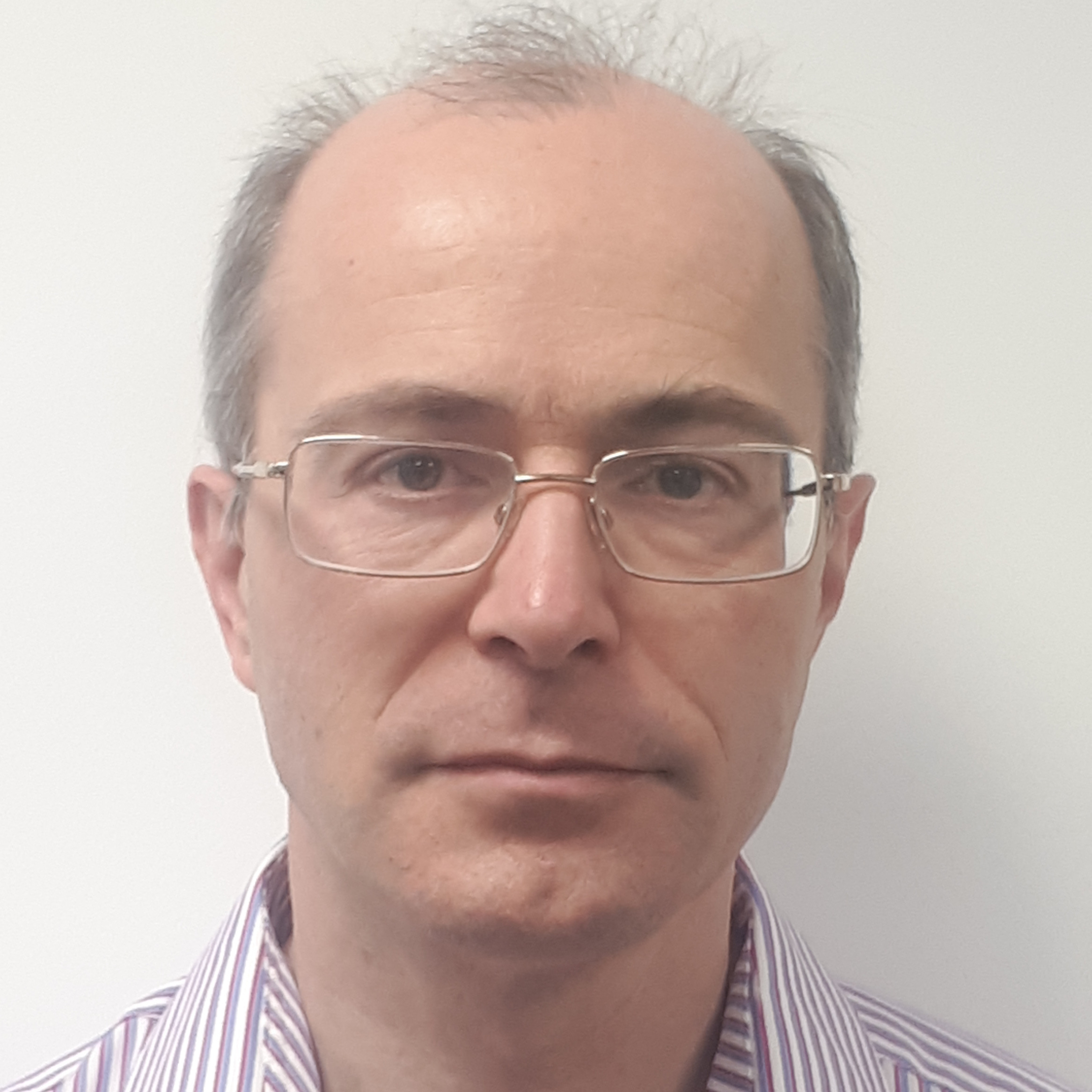
Stuart Baker, PhD, Newcastle University
16 to 16 Apr. 2026 - 12:00
Stuart Baker, PhD, Newcastle University
John Krakauer, MD, Director of the Centre for Restorative Neurotechnology
Seminar Room
Ideas for movement arise in the cerebral cortex; movements are produced by muscles, which are innervated by motoneurons in the spinal cord. A key requirement for motor control is therefore to transmit commands from cortex to spinal cord. In primates, the corticospinal tract forms a direct conduit to do this, but there are also more indirect pathways. The reticulospinal tract (RST) originates in the reticular formation in the brainstem; it receives corticoreticular inputs.
The textbook view of the RST is that it is involved only in gross movements such as postural adjustments and locomotion. However, we have shown that this pathway is also important in upper limb movements in primates – even in control of the hand. The RST is especially important in producing high forces.
If the RST acts as a parallel pathway to the corticospinal system, this suggests it should be able to help compensate after corticospinal damage, such as after stroke. This seems to be the case, with RST connections strengthening and partially restoring input to motoneurons.
Conversely, some have suggested that excessive RST strengthening could be harmful. After stroke, some people develop the flexor synergy, in which attempts to abduct the shoulder lead to obligate elbow flexion. A common theory in the literature is that the flexor synergy is caused by excessive reliance on the RST, with its less selective inputs to motoneurons. We recently measured how cells in different motor areas in healthy macaques code for elbow and shoulder contractions. Surprisingly, in all areas – including the reticular formation – there was a strong preference to code co-contractions opposite to those seen after stroke (shoulder abduction with elbow extension). Stimulation data showed that only the spinal cord was capable of generating shoulder abduction with elbow flexion. Our data therefore point to the spinal cord, and not the reticular formation, as the source of the flexor synergy post-stroke. This has interesting implication for control of reaching in health, suggesting that reaches in different directions involve different contributions from spinal and supra-spinal circuits.
Stuart Baker trained in the laboratory of Roger Lemon in Cambridge and Queen Square, London, before establishing his own laboratory in Cambridge. He then moved to Newcastle, where he is currently Professor of Movement Neuroscience. His studies in neural control of movement use both macaque monkeys and human subjects.
Register here.
Champalimaud Research (CR) Colloquia Series is a seminar programme organised by the Champalimaud Centre for the Unknown to promote the discussion about the most interesting and significant questions in neuroscience and physiology & cancer with appointed speakers by the CR Community.

