26 to 29 Jan. 2015
Social Insect Behaviour Workshop
The workshop will have talks from experts in the field, wisdom of the crowds games, programming exercises and practical work.
Location: CCU Seminar Room
Host: Gonzalo de Polavieja

26 to 29 Jan. 2015
The workshop will have talks from experts in the field, wisdom of the crowds games, programming exercises and practical work.
Location: CCU Seminar Room
Host: Gonzalo de Polavieja
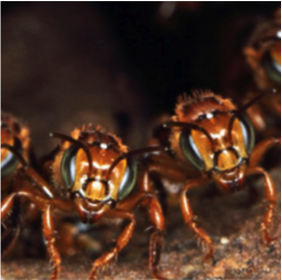
The workshop will have talks from experts in the field, wisdom of the crowds games, programming exercises and practical work.
A central theme in biology is the study of complex systems and how they can be built from much simpler components, such as the molecular components of DNA regulating cell development or the networks of neurons underlying sophisticated behaviours. What are the fundamental processes that produce such complexity? The questions addressed in the study of animal collectives are of significant relevance to the study of other systems with comparable properties, such as the brain. Similar to populations of neurons, animal collectives may have evolved the ability to coordinate their behaviour in order to enhance their data collection, information processing, and decision making. Social insect colonies are an excellent model for the experimental investigation of the mechanisms of complexity since they allow us to observe the effects of direct manipulation of components on collective behaviour. In this workshop we aim to focus on this topic at different levels. We will discuss the advantages of working together as a group and why such capability might have evolved.nnWe will look into how information is processed and transferred amongst the different individuals of a group and what are the causes and consequences of variability among individuals. Finally, we will focus on the cognitive capacities of individuals and how these may be used to solve problems that are often solved collectively. The workshop is conceived as an opportunity for open discussion and cross-disciplinary interactions, which we expect will lead to a lot of fruitful discussions.
