
- Platforms
About
Immersive AI Systems Group
Immersive AI Systems Group
Immersive AI systems merge sensing, movement, and real-time generative feedback into adaptive environments for therapy, creativity, and exploration. Designed to respond to people in intuitive and embodied ways, they read motion, emotion, and expression, transforming them into dynamic, interactive worlds.
Beyond traditional interfaces, we create room-scale environments and VR worlds where presence, perception, and imagination converge — living dialogues between human and machine that foster play, learning, and restoration.
Our work spans the Neurotechnology Warehouse and the Digital Neurotherapeutics Clinic at the Champalimaud Center for the Unknown — from prototyping and experimentation in the Warehouse to the creation of clinical Immersion Rooms that bring these technologies into therapeutic use.
Get in touch
Write to us to collaborate with us, or to find out more about our work: immersive_ai@research.fchampalimaud.org
Team
Immersive AI Systems Group
Know our team
Niklas Fricke, PhD
Senior AI Scientist
Johannes Stelzer, PhD
Senior AI Scientist

Fatemeh Molaei, PhD
Senior AI Scientist
Alexander Loktyushin, PhD
Senior AI Scientist

Muhammad Shahzeb
Research Technician
Projects
Immersive AI Systems Group
The Technologies
Immersive AI Systems Group
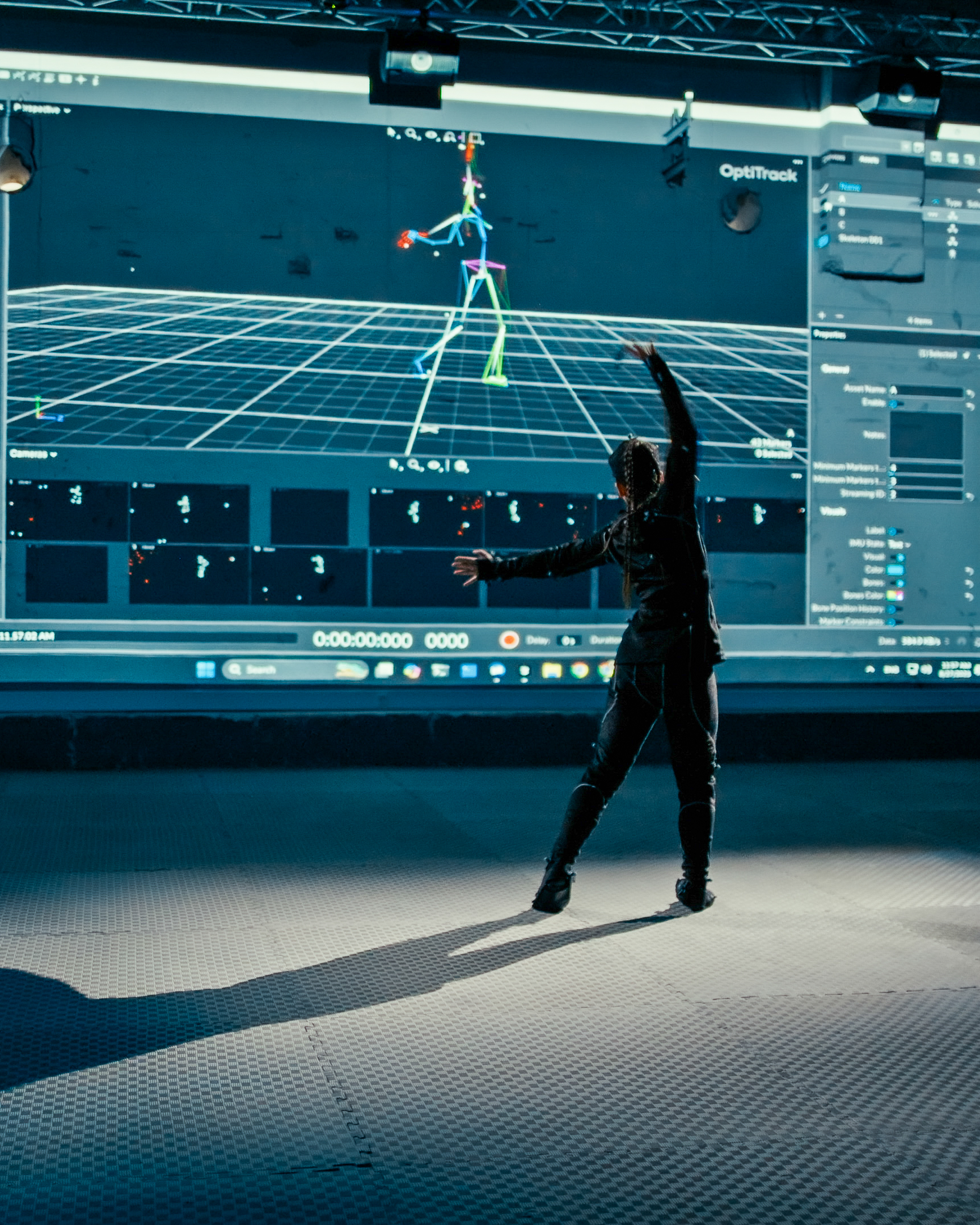
Discover our Tech
Our systems integrate real-time 3D motion tracking, immersive VR environments, spatial audio, and generative AI. We use high-precision multi-sensor capture to reconstruct the body in motion, enabling motion fingerprinting – fine-grained analysis of motor patterns and individual movement signatures. Eye-tracking, haptic feedback, and biometric feedback give insight into the psychological and cognitive states of the user.
Data streams are processed online by multimodal AI architectures, combining vision, motion, sound, and language understanding. Large language models provide contextual reasoning, while generative networks synthesize audiovisual feedback in real time.
On the output side, adaptive VR rendering, real-time video generation, AI-generated music, and spatially reactive soundscapes create environments that evolve with the user. Gaussian splatting supports rapid 3D reconstruction and rendering, and 3D animation with rigged characters enables expressive avatars and interactive agents.
Our systems operate as a continuous loop of perception, reasoning, and generation – sensing human signals, interpreting intent, and producing personalized immersive feedback for research, therapy, and creative exploration.
AI & Creativity
Immersive AI Systems Group
Therapeutic Synergies
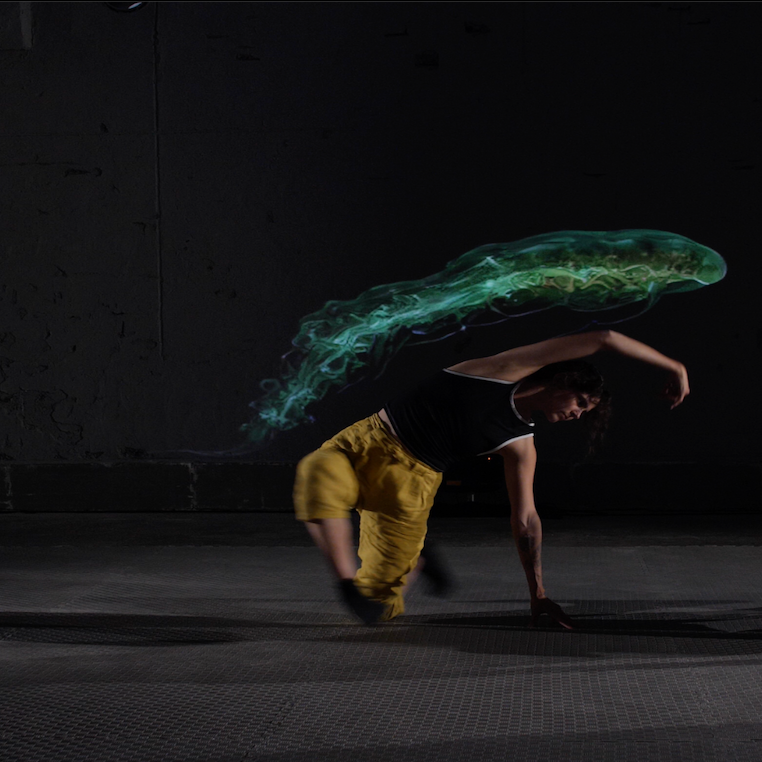
Artistic collaboration is integral to our research. Working with artists – often in dialogue with Bridges to the Unknown, the Champalimaud Foundation’s art–science programme – allows us to explore the expressive dimensions of our technologies, turning experimental systems into immersive installations, performances, and concerts that reveal how people feel, move, and respond within AI-driven environments.
These projects act as open laboratories, where the same real-time perception and generative systems used in therapy are recontextualized as shared spaces for artistic investigation and co-creation. Alongside public exhibitions such as Metamersion and large-scale immersive concerts and performances, collaborations like our work with Rudolfo Quintas explore how generative AI can help older adults evoke, organize, and re-express personal memories – not as content, but as material for co-creation.
Artistic engagement produces valuable data on human–AI interaction – how people adapt, play, and express themselves in adaptive spaces. It also closes a feedback loop between creative experimentation and clinical application, helping us refine motion-based therapies, improve interface design, and inspire new directions for immersive neurotechnology.
