
26 February 2026
Champalimaud Foundation and Instituto Superior Técnico Join Forces to Lead Research in Neurorobotics
New partnership launches groundbreaking lab at the intersection of neuroscience, robotics, and artificial intelligence
26 February 2026
New partnership launches groundbreaking lab at the intersection of neuroscience, robotics, and artificial intelligence
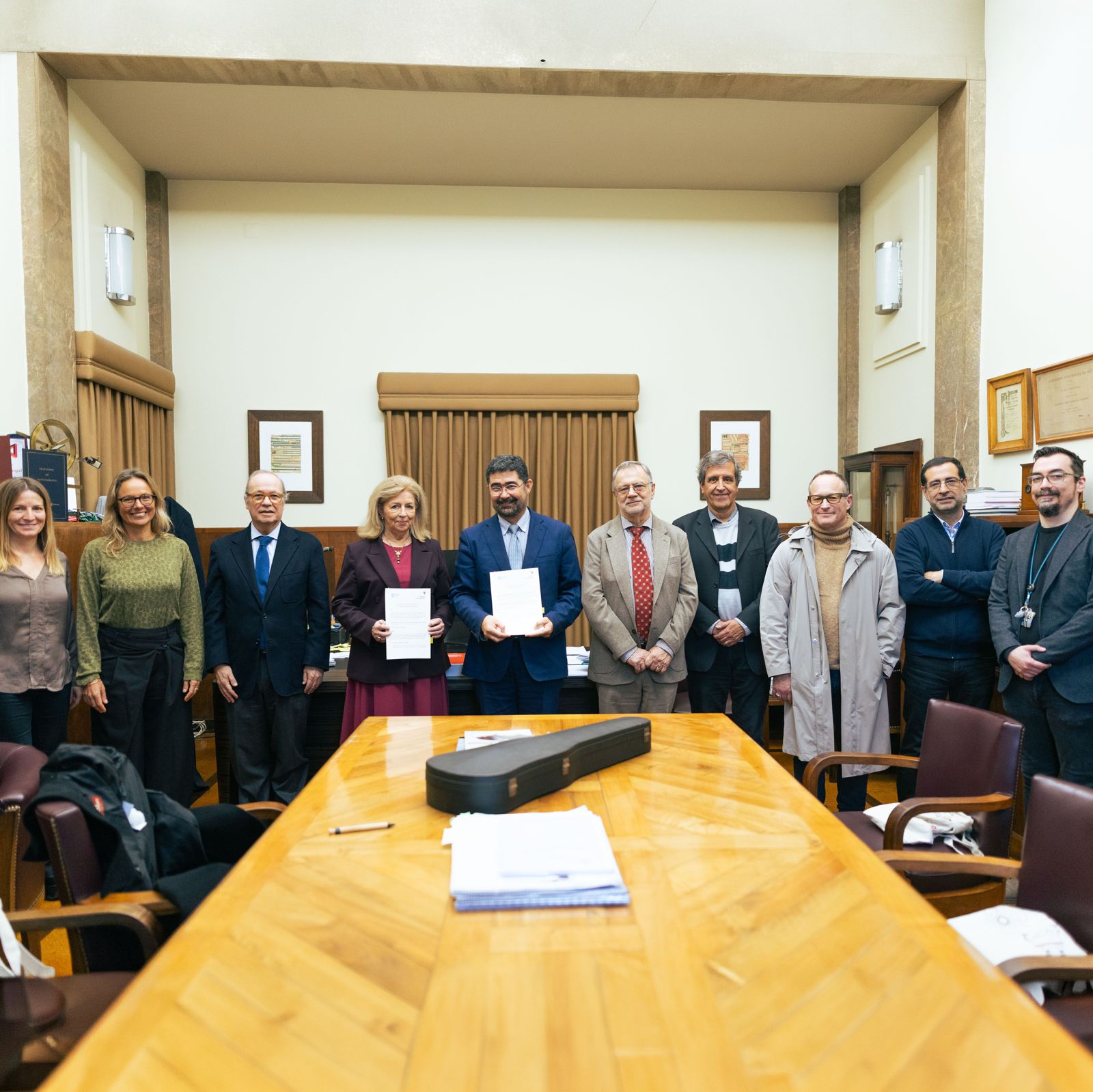
The Champalimaud Foundation (CF) and Instituto Superior Técnico (IST) have established a five-year strategic partnership to create a Neurorobotics Laboratory within the CF Neurotechnology Warehouse. Signed on 18 February, the agreement brings together two of Portugal’s leading research institutions with the goal of advancing the understanding of intelligence - both biological and artificial - at the convergence of brain science, robotics and artificial intelligence.
The initiative results from a collaboration between the CF Neurotechnology Warehouse, directed by Joe Paton and John Krakauer, and IST’s Institute for Systems and Robotics (ISR/LARSyS). The new laboratory will serve as an integrated research environment where biological principles of brain function will inform the development of intelligent robotic systems, while these systems will in turn help uncover the mechanisms of neural computation.
By combining fundamental and applied research in neurorobotics, the partnership promotes the development of bio-inspired models of neural function and their translation into therapeutic and technological applications. This initiative positions Lisbon as an international reference hub for exploring the interface between natural and artificial intelligence.
The new Neurorobotics Laboratory will organise its activities around four complementary research areas.
- Neurorehabilitation and Digital Therapeutics will develop assistive robotics, immersive environments, brain-computer interfaces and medical devices aimed at restoring motor and cognitive functions. This area will be led by Patrícia Figueiredo and Athanasios Vourvopoulos (ISR/LARSyS), in collaboration with John Krakauer (CF).
- Embodied AI will focus on how artificial systems build models of the world through active interaction with their environment, drawing inspiration from mechanisms of biological intelligence. This research line will be coordinated by José Santos-Victor and Joana Cabral (ISR/LARSyS), together with Joe Paton (CF).
- Social Robotics will investigate the use of robots in social, therapeutic and domestic contexts, requiring an advanced understanding of human behaviour and interaction. This work will be led by Pedro U. Lima and Catarina Barata (ISR/LARSyS), in collaboration with John Krakauer (CF).
- Biomimetic Robotic Creatures will focus on developing neuroscience-inspired devices and neuromimetic control systems, combining biomimetic sensing and brain-based computation to enhance autonomy and resilience. This area will be coordinated by Alexandre Bernardino and Rita Cunha (ISR/LARSyS), in collaboration with Joe Paton (CF).
Researchers involved across these areas will form the coordinating team of the Neurorobotics Laboratory, ensuring coherent scientific direction while fostering interdisciplinary collaboration.
Beyond research, the partnership also prioritises education and training, including the co-supervision of master’s and doctoral students, the organisation of training activities, seminars and workshops, and the development of joint academic programmes in neurotechnology.
The CF and IST also commit to sharing infrastructure, specialised expertise and collaborative networks to ensure the project’s long-term sustainability. The partnership includes joint applications for national and international competitive funding, as well as collaboration in philanthropic initiatives, fundraising efforts and strategic industry partnerships.
By combining the CF’s excellence in neuroscience and translational research with IST’s leadership in robotics and autonomous systems, alongside the shared AI expertise of both institutions, the Neurorobotics Laboratory will create a unique innovation ecosystem, bringing together scientists, clinicians, engineers and students to advance the future of neurotechnology in Portugal and beyond.
