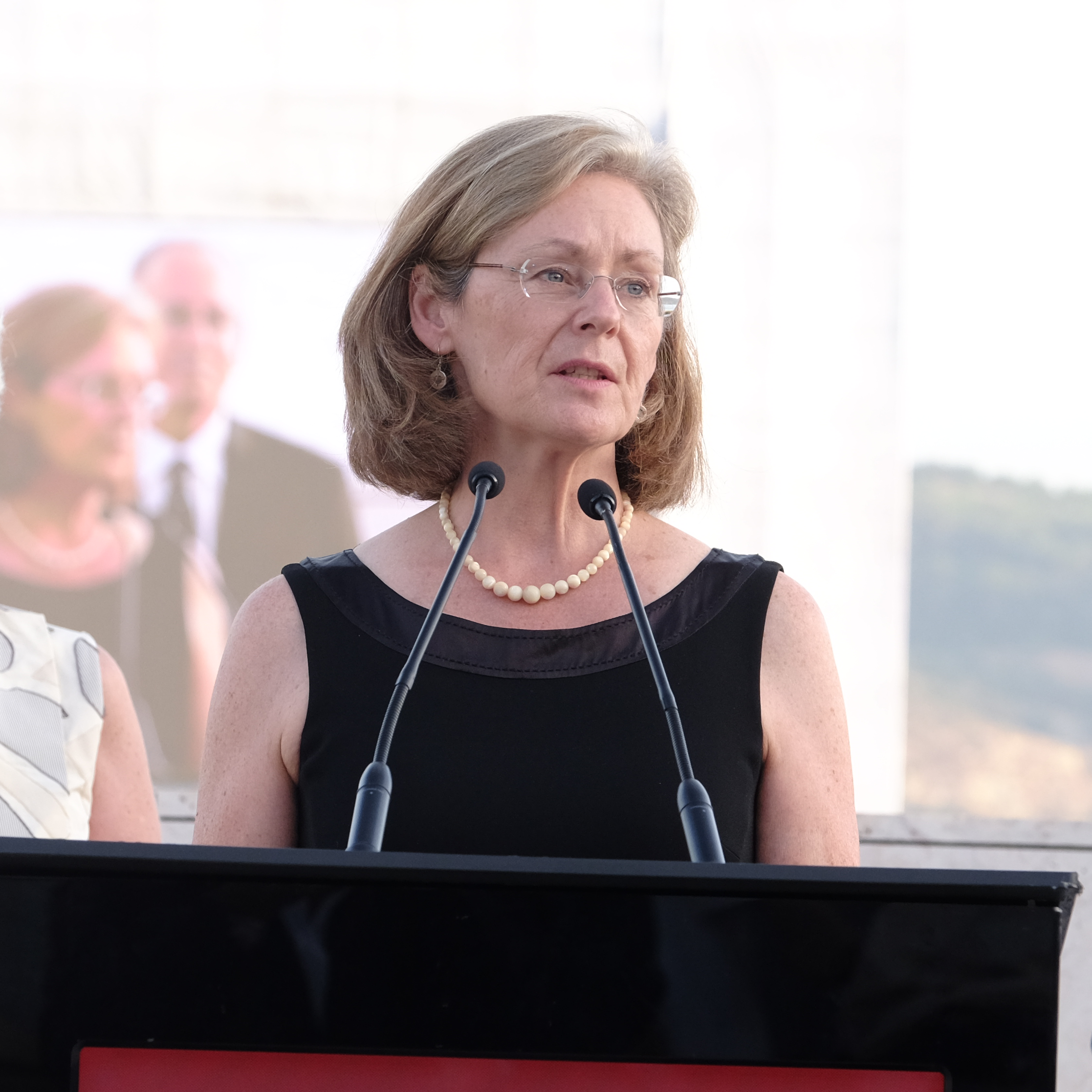
Holt, who identified the Champalimaud Foundation as a supporter of research recognised by the prize, shares the $1 million award with Professor Kelsey Martin, Professor Erin Schuman and Professor Oswald Steward “for the discovery of local protein translation in neurons and establishing its importance for brain development and plasticity.” The Kavli Prize, awarded every two years, honours scientists whose discoveries have transformed our understanding of the universe, the nanoscale and the brain.
Holt’s work fundamentally changed our understanding of how neurons function and connect. Her research demonstrated that the growing tips of developing nerve fibres, known as axons, can independently respond to chemical signals and locally produce the proteins needed to navigate toward their targets, even without direct contact with the cell body. This discovery overturned the long-standing assumption that proteins are produced only in a neuron’s cell body, revealing instead that neurons possess local machinery capable of rapidly generating proteins exactly where they are needed.
These findings have had profound implications for neuroscience, illuminating how brain cells establish and adapt their connections during development and learning. By uncovering the mechanisms underlying neural plasticity, Holt’s work has also opened new avenues for understanding and potentially treating neurological disorders.
Holt previously received the António Champalimaud Vision Award in 2016, alongside John Flanagan, Carol Mason and Carla Shatz, for discoveries explaining how retinal neurons connect with precise targets in the brain to create accurate visual maps.
Their collective work revealed the cellular and molecular mechanisms that guide retinal projections from the eye to the brain, processes essential for normal vision. By demonstrating how these neural pathways are established and refined, the laureates provided crucial insights into how visual disorders may arise when these connections fail to form correctly, opening up possibilities for future neurological therapies for vision impairment.
Together, Holt's Vision Award and Kavli Prize reflect the broad and lasting influence of her contributions to research on how the nervous system develops and adapts, and reaffirm the importance of fundamental neuroscience in advancing both scientific knowledge and future approaches to treating brain disorders.
Text by Catarina Ramos, Co-coordinator of the Champalimaud Foundation Communication, Events & Outreach Team.