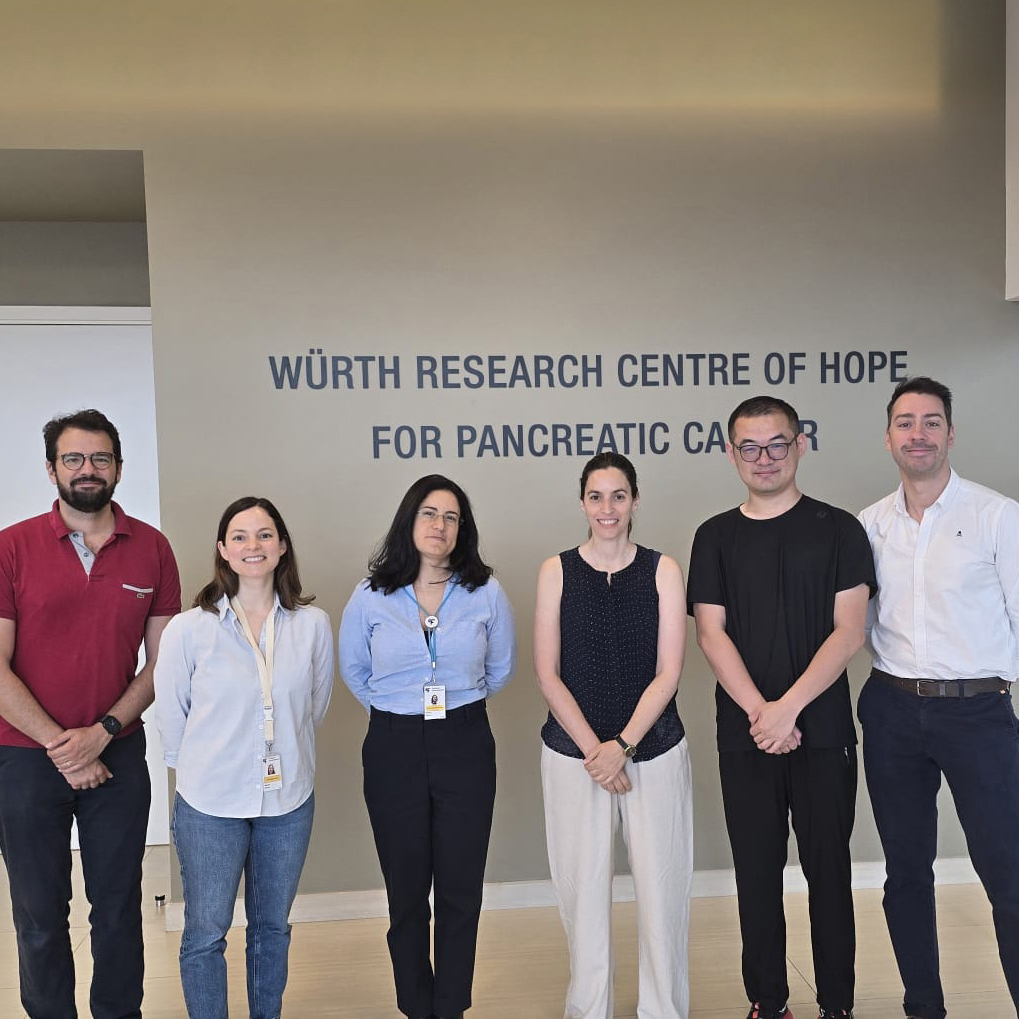
Developed through a partnership between the Champalimaud Foundation and the Faculdade de Medicina da Universidade de Lisboa (FMUL), the programme supports the career development of surgeons and clinician-scientists committed to advancing cancer research. The PhD degree is granted by FMUL within the framework of the Lisbon Academic Medical Centre PhD Programme.
The inaugural cohort includes Filipe Borges, Miguel Fróis Borges, Ana João, Vera Oliveira, Marta Sousa and Kai Sun, who will develop their doctoral projects in the Würth laboratories at the Botton-Champalimaud Pancreatic Cancer Centre. Their work will take place within a research environment dedicated to surgical oncology, spanning basic science, translational research and clinical trials.
Coordinated by Professor Paulo Costa and Professor Markus Büchler, the programme offers a flexible doctoral pathway for surgical residents and certified surgeons working in surgical oncology. Exceptionally, certified gastroenterologists with a strong oncology focus and certified oncologists may also apply.
The programme combines the academic structure of the CAML PhD with the scientific, clinical and technological environment of the Champalimaud Foundation. Students benefit from co-supervision by faculty and researchers from both institutions, as well as access to seminars, scientific meetings, laboratory training and mentorship throughout their projects.
For Filipe Borges, the programme offers a way to address clinical questions through a strong scientific framework. “Joining this programme is an opportunity to develop a research project within an environment where surgical oncology, cancer biology and translational science are closely connected,”
Training opportunities include experimental surgery principles, ethics in experimental and clinical research, clinical trial methodology, oncobiology, translational surgery projects, biobanking, digital pathology, sequencing technologies, spatial omics, bioinformatics, scientific writing and grant preparation.
For Ana João, this multidisciplinary approach is essential. “Surgical oncology increasingly depends on the integration of different areas, from molecular biology and pathology to clinical trials and data analysis,” she says. “This PhD offers the opportunity to develop research in a setting that reflects that complexity.”
Projects may be developed across basic, translational or clinical research, supported by ongoing initiatives at the Champalimaud Foundation. When appropriate, projects may also involve the experimental surgical laboratory and bioterium at FMUL.
This integration between clinical practice and research is central to the programme’s mission. As Miguel Fróis Borges notes, “The programme provides a framework in which surgical training and academic research can reinforce one another. This is essential for developing the next generation of surgeons who are able to contribute not only to patient care, but also to the scientific foundations of the field.”
For Vera Oliveira, the programme’s value lies in its ability to transform clinical questions into structured scientific investigation. “Many research questions arise from clinical practice,” she says. “This programme provides the mentorship, structure and institutional environment needed to transform those questions into robust research projects.”
The students will also join a collaborative research environment designed to foster scientific exchange, mentorship and international engagement. Participation in national and international meetings will be encouraged throughout the programme.
For Kai Sun, this integrated environment is one of the programme’s greatest strengths. “The opportunity to develop a PhD project within a network that brings together clinical expertise, laboratory research and advanced technologies is highly valuable,” he says. “This integration is essential for research that aims to have an impact in surgical oncology.”
Marta Sousa highlights the importance of advanced research training for clinicians involved in innovation in cancer care. “The programme creates the conditions to develop scientific skills while maintaining a strong focus on surgical oncology and patient-relevant challenges,” she says.
The launch of the first cohort reinforces the shared commitment of the Champalimaud Foundation and FMUL to biomedical education, clinical research and academic leadership in surgical oncology.
As the first PhD candidates begin their doctoral work, they will also help shape the identity of this new programme and contribute to a growing research ecosystem dedicated to advancing surgical oncology and improving cancer care.
Text by Teresa Fernandes, Co-Cordinator of the Champalimaud Foundation's Communication, Events & Outreach Team.