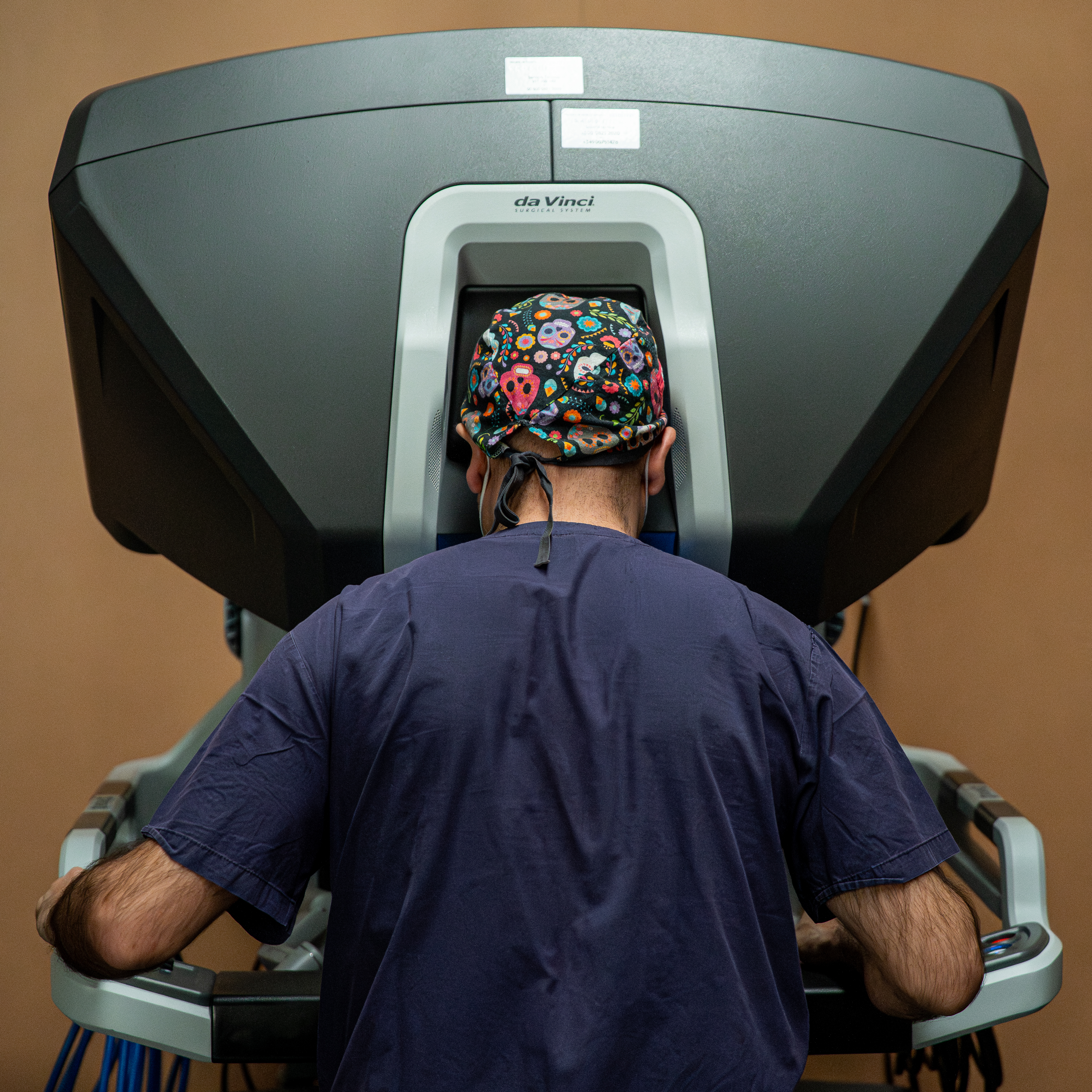
This procedure was done within the framework of the newly launched Programme for Minimally Invasive Robotic and Endoscopic Breast Surgery, an initiative developed by the Champalimaud Foundation as part of the surgical treatment options offered to selected breast cancer patients, representing a significant advancement in surgical innovation and patient-centred care.
Following international certification in the Da Vinci robotic surgery system, surgeon Pedro Gouveia led the minimally invasive breast surgery, alongside colleague David Pinto, proctor Manolo Garcia and scrub nurse Inês Bolina. Together, Pedro Gouveia and David Pinto are currently the only Portuguese surgeons accredited to perform this procedure.
The intervention was done on a patient presenting a recurrent borderline lesion and increased oncologic risk, who underwent risk-reducing surgery following multidisciplinary assessment and psychological assessment, within a shared decision-making process.
“Robotic mastectomy was selected for its minimally invasive approach, allowing for smaller and less visible incisions, improved cosmetic outcomes and high levels of patient satisfaction compared with conventional open mastectomy,” Pedro said. “In addition, this technique may contribute to better preservation of skin sensation and temperature perception in the postoperative period,” he added. International studies also report reduced blood loss, fewer complications, less postoperative pain and faster recovery, while maintaining oncological safety.
This technique may be suitable for selected patients, including those seeking risk-reducing mastectomy due to high genetic or familial risk of breast cancer. Additional eligibility criteria typically include patients with small to moderately sized breasts and no ptosis (sagging).
"This first procedure represents an important step forward in consolidating robotic breast surgery in Portugal, with the potential to expand more personalised and less invasive treatment options for patients" says Maria João Cardoso, Coordinator of the Breast Cancer Research Program at the Champalimaud Foundation. Echoing this vision, Andrea De Censi, Director of the Breast Department, stated: “Building on solid international evidence and on the structured robotic surgery programme established at the Champalimaud Clinical Centre, we believe this technique will progressively become a standard option for selected patients, enabling more personalised, less invasive treatments with immediate and tangible benefits for people facing breast cancer.”
Text by Teresa Fernandes, Co-coordinator of the Champalimaud Foundation's Communication, Events & Outreach Team