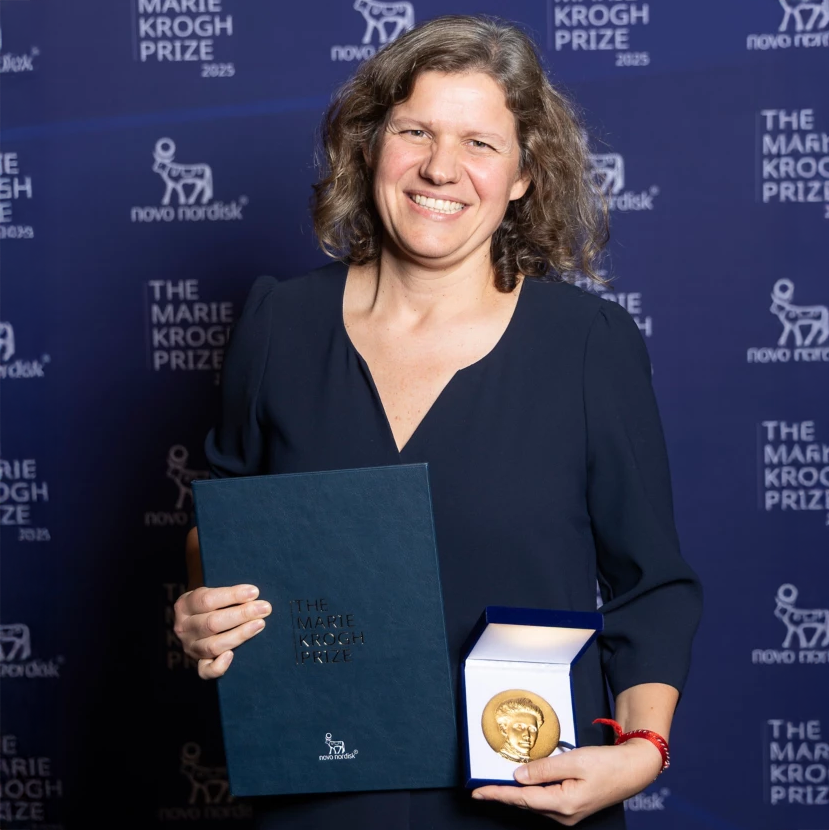
As a winner of the Outstanding Mid-Career Researcher Award, Inês Pires da Silva was recognised for her exceptional progress and global impact in translational cancer research. She has led international studies that have shaped current clinical practice and advanced scientific understanding of resistance mechanisms in immunotherapy. Her work has been instrumental in demonstrating how metastatic sites, such as the liver, can influence treatment response and patient outcomes.
In addition, Pires da Silva was named the inaugural winner of the Marie Krogh Young Women in Science Prize (2025), a distinction celebrating her leadership and innovation in oncology. This includes the creation of the NeoPlatform, a world-first research initiative that applies cutting-edge technologies to personalise neoadjuvant immunotherapy, which she established and leads together with Prof. Georgina Long. She also developed the Melanoma Risk Prediction Tool for advanced melanoma patients in collaboration with Prof. Georgina Long, Prof. Alexander Menzies, and Prof. Serigne Lo. This tool has become a transformative global resource, guiding clinical decision-making and informing health policy, including the inclusion of combination immunotherapy on Australia’s Pharmaceutical Benefits Scheme (PBS) listing for advanced melanoma.
Through her career, Pires da Silva has authored more than 90 peer-reviewed publications in leading journals such as The Lancet Oncology, The New England Journal of Medicine, Cancer Cell and The Journal of Clinical Oncology. Her contributions have been recognised by major international organisations, including the American Society of Clinical Oncology (ASCO), the European Society for Medical Oncology (ESMO), and the Melanoma Research Alliance (MRA).
Beyond her scientific achievements, she is a dedicated mentor and advocate for early-career researchers and women in science. She serves on national and international scientific committees and actively supports the development of the next generation of oncology leaders.
Together, these two awards celebrate not only Pires da Silva exceptional scientific accomplishments, but also her vision to translate melanoma research into meaningful, real-world improvements in patient care worldwide.
About the Outstanding Mid-Career Researcher Award
The Outstanding Mid-Career Researcher Award recognises researchers who are five to ten years post-PhD and have demonstrated exceptional scientific progress, leadership, and impact in their field. The award celebrates innovative, internationally recognised research that advances knowledge and contributes to improved outcomes in science, health, and society. It reflects Australia’s commitment to supporting excellence in biomedical and translational research, as well as fostering leadership, mentorship, and sustained contributions to scientific progress.
About the Marie Krogh Young Women in Science Prize
The Marie Krogh Young Women in Science Prize is a prestigious Australian award that honours women whose research demonstrates innovation, leadership, and measurable impact on healthcare. It celebrates groundbreaking research that transforms knowledge into tangible benefits for patients and communities while promoting gender equity and leadership in research. The Prize includes national recognition, funding support, and entry into the Marie Krogh Alumni network, which fosters collaboration, mentorship, and visibility for women in STEM.
The Prize is an initiative supported by the Marie Krogh Foundation, which is dedicated to advancing scientific discovery and promoting women’s leadership in research. Named after Dr. Marie Krogh, a pioneer in medical science, the Foundation continues her legacy by empowering new generations of women scientists to challenge boundaries, shape health policy, and inspire change.
Text by Teresa Fernandes, Co-coordinator of the Champalimaud Foundation's Communication, Events & Outreach Team