15 May 2026
Welcome Prof. Otmar Wiestler, MD, New Director of Champalimaud Science
Returning home to the fascinating field of biomedicine.
15 May 2026
Returning home to the fascinating field of biomedicine.
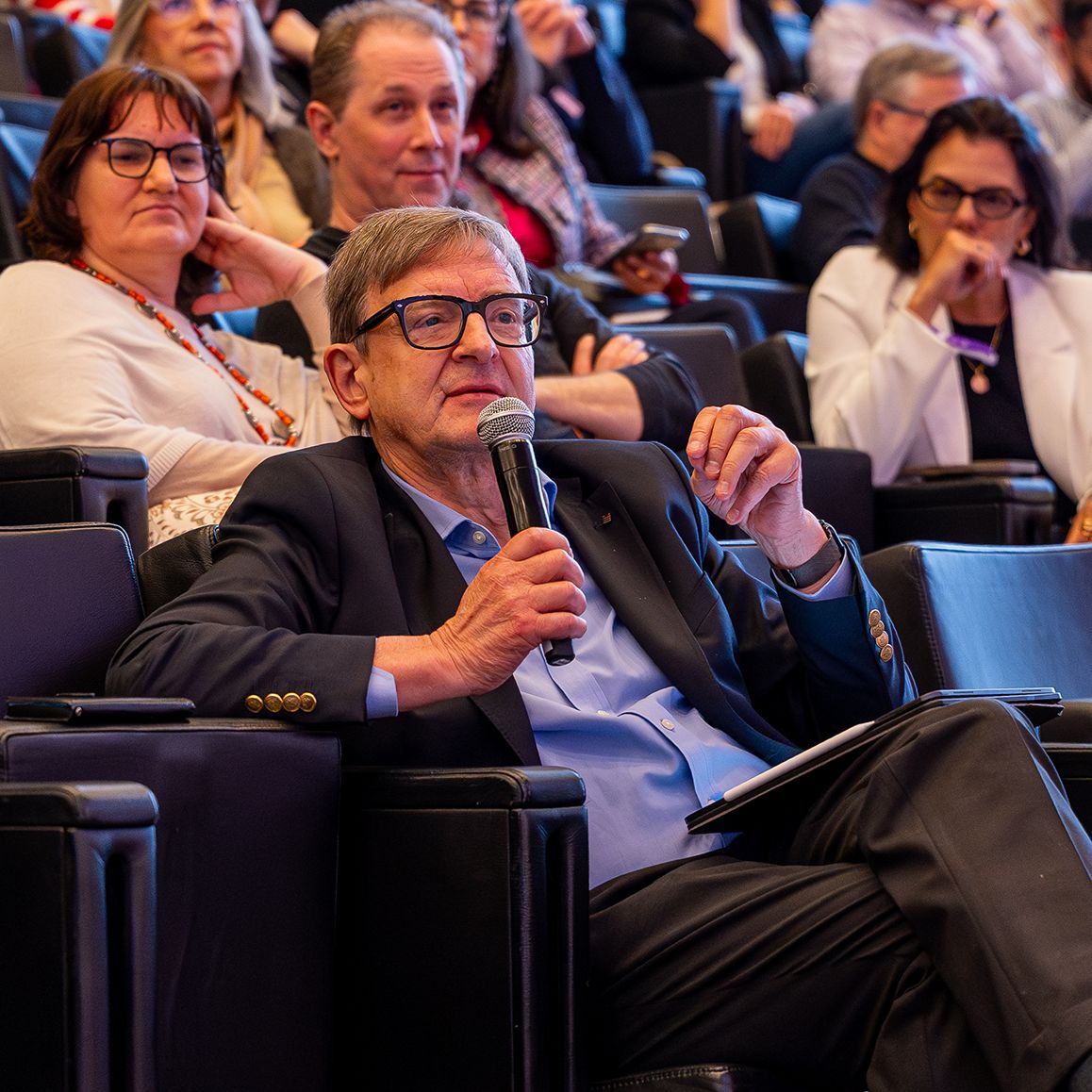
With a career spanning leadership of some of Europe’s most influential biomedical research institutions, Otmar Wiestler joins the Champalimaud Foundation as Director of Champalimaud Science. An internationally recognised physician-scientist and research leader, he has played a central role in shaping large-scale scientific organisations, most notably as President of the Helmholtz Association and, prior to that, as Chairman and CEO of the German Cancer Research Center (DKFZ).
Throughout his career, Otmar has combined deep expertise in neuropathology and cancer research with a strong focus on building and coordinating multidisciplinary research environments. At the Champalimaud Foundation, he takes on a newly created role that aims to reinforce connections across scientific programmes, clinical activity and education, helping to define a more integrated and collaborative vision for the institution’s future.
For Otmar Wiestler, the decision to join the Champalimaud Foundation emerged over time rather than from a single turning point.
After completing his second term at Helmholtz, he considered two possible directions. “One would have been to take on a number of advisory roles, building on experience accumulated over many years,” he says. “The other was to join an institution with striking future potential and help shape it. The Champalimaud Foundation clearly offered that opportunity.”
He also describes the move as something of a return. After more than a decade leading a large, multidisciplinary organisation, he sees it as reconnecting with familiar ground, “returning home to the fascinating field of biomedicine”.
The role of Director of Champalimaud Science is a new one within the Champalimaud Foundation, created to strengthen interaction between research and clinical work. These two worlds already sit side by side on the Champalimaud Foundation campus, where laboratories and clinical facilities share the same space.
What matters now, he suggests, is what happens beyond that proximity. “What we must work on is turning this into a place with much more interaction between research and the clinical side,” he says. “That is essential if we want to achieve real success in translational research.”
A central concept in this effort is what President Leonor Beleza has described as “Fusion Research”, a term coined by Vice-President João Silveira Botelho to describe a integrated way of working across disciplines and professional cultures. Otmar goes on to say, “We want to position the Champalimaud Foundation as a powerhouse for translation at the interface between cutting-edge research and high-tech medicine.”
He is also quick to emphasise that this is not straightforward. “These are different cultures,” he notes. “Scientists and clinicians often have different perspectives and priorities.”
Rather than trying to remove those differences, the focus is on working across them and unlocking the unique potential for fruitful cooperation. This includes creating more opportunities for shared work, supporting continuous exchange, joint initiatives, and strengthening roles that bridge both environments. “Colleagues who work in both the clinic and the laboratory can build bridges better than anyone else.”
In his first months at the Champalimaud Foundation, Otmar is focusing on understanding the institution in depth. A structured onboarding programme will take him through all research groups, clinical units and support services. “This is the most effective way to gain a thorough overview and to meet as many colleagues as possible,” he says. “It will form the basis for defining our future strategy together.”
Several areas already stand out as priorities within the Champalimaud Foundation’s scientific and clinical landscape. Examples include pancreatic and prostate cancer, digital neurotherapeutics, and the use of artificial intelligence in medicine and in biomedical research.
What links these fields, he suggests, is the opportunity to strengthen connections between research and clinical application. “We need to focus on areas where we have real strength on both the research and clinical sides, and where we can build interdisciplinary excellence with a unique profile and critical mass.”
He also points to a broader shift in future medicine. “Medicine is still very much a repair business. We wait for disease to develop and then try to fix it. We must pay much more attention to early detection and prevention. Champalimaud can play a pioneering role here as well.”
Across all areas of development, Otmar keeps returning to one central point: people.
“At the end of the day, success depends on talented and creative minds,” he says. “Even with excellent infrastructure, you cannot perform at the highest level without the right people.”
Attracting, developing and enabling talent will therefore be a core priority at the Champalimaud Foundation. This includes not only recruitment and career development, but also creating conditions that allow clinicians and researchers to work across different roles, with protected time for research alongside clinical activity, particularly at the interface between research and clinical practice.
“We need individuals who are able to combine different perspectives, for example in medicine and research or in medicine and data science. This kind of interdisciplinary talent will become increasingly important.”
While the Champalimaud Foundation already has strong visibility in selected scientific areas, Otmar Wiestler sees scope to further strengthen its international profile.
“If we succeed in establishing real centres of excellence in selected areas, this will naturally enhance our international positioning.”
For him, global visibility follows collaboration rather than precedes it. “Medical challenges are global,” he says. “International partnerships are essential, whether at the level of individual research groups or through institutional alliances.”
Having arrived in Lisbon just four weeks ago, Otmar and his wife are still settling into their new surroundings. “It is a very stimulating environment,” he says, “and there is a strong sense of respect and trust, which feels different from what we were used to in Berlin.”
Outside work, family remains central. With six children and six grandchildren, life is full and active. When time allows, he prefers to spend it outdoors, now in Portugal.
“Whenever possible, I like to go to the mountains,” he says. “There is a sense of freedom there that helps to clear your mind and lose your ballast.”
As he begins his role at the Champalimaud Foundation, Otmar Wiestler’s focus is on building connections across disciplines, people, teams and institutional boundaries.
“We have a unique opportunity here,” he says. “If we bring the different parts of this institution together in the right way, we can achieve something truly exceptional, in line with our founder’s vision.”
